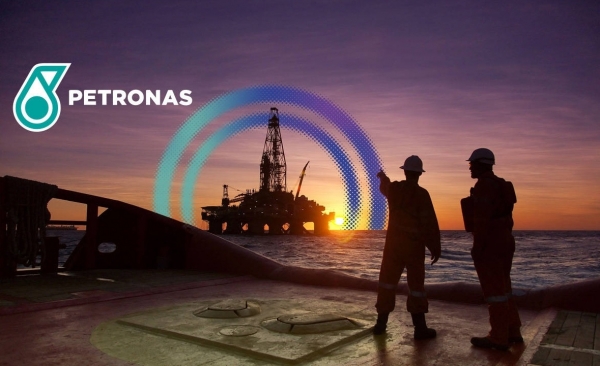
Petronas discovers large gas offshore Suriname: New step towards floating LNG project
Malaysia's national oil and gas corporation, Petronas, has just announced an important gas discovery at Block 52 offshore Suriname, marking a strategic step forward in its plan to develop a floating LNG (Floating Liquefied Natural Gas - FLNG) project in this area.
Context of important findings
The discovery of a new gas field at Block 52 offshore Suriname is considered a great success for Petronas, especially in the context of the global energy industry looking for natural gas supplies to convert from traditional fossil fuels.
Suriname, a country located on the northern coast of South America, is gradually becoming an attractive destination for international oil and gas companies thanks to its huge untapped energy potential. The country has opened its oil and gas blocks for bidding, attracting interest from major energy corporations around the world.
Details of new discovery
According to information from Petronas, the new gas discovery at Block 52 was made through seismic exploration and initial exploration drilling. Initial analysis results show that the potential gas reserves of this area can be up to trillions of cubic feet (Tcf).
| Specifications | Estimated value |
|---|---|
| Location | Block 52, offshore Suriname |
| Water depth | 1,800 - 2,200 meters |
| Drilling depth | About 5,000 meters |
| Potential reserves | 5-10 Tcf (trillion cubic feet) |
Petronas' floating LNG strategy
The gas discovery in Suriname is consistent with Petronas' long-term strategy of diversifying supply sources and developing floating LNG projects. Floating LNG technology allows gas exploitation in areas with complex geological conditions or offshore, where the construction of above-ground facilities is not economically feasible.
The floating LNG project in Suriname is expected to have a processing capacity of about 2-3 million tons of LNG per year, making an important contribution to Petronas' global LNG production portfolio. Malaysia is currently one of the world's leading LNG producers, with a production capacity of about 30 million tons per year.
Advantages of floating LNG technology
- Reduce initial investment costs compared to traditional LNG projects
- Increase flexibility in deployment and operations
- Minimize impact on the marine environment
- Allows exploitation of gas fields in deep water areas
- Deployment time is faster than on-ground projects
Strategic significance
Petronas' investment in Suriname not only brings economic benefits but also has strategic significance in the context of increasingly fierce global energy competition. Suriname is located close to major energy consuming markets such as North America and Europe, helping to reduce transportation costs compared to supplies from the Middle East or Asia.
In addition, gas discovery in Suriname also contributes to diversifying global energy supplies, reducing dependence on traditional areas. This is especially important in a context where countries are trying to ensure energy security and transition to cleaner energy sources.
Challenges and prospects
Despite great potential, the development of floating LNG projects in Suriname still faces many challenges. Issues that need to be resolved include:
- Geological conditions are complex in the area
- Limited infrastructure in Suriname
- Political and legal factors
- Global energy price fluctuations
- Environmental and social pressures
However, with extensive experience in the oil and gas industry and advanced floating LNG technology, Petronas is considered to have the capacity to overcome these challenges and turn potential into reality.
Reaction from the market
Information about Petronas' new gas discovery in Suriname has received positive attention from the financial market. Analysts predict that this development will help increase Petronas' market capitalization and strengthen the group's position in the global energy industry.
Energy analyst at Maybank, Mr. Tan Sri Zainal Abidin, commented: "Discovering gas in Suriname is a strategic move for Petronas, helping the group diversify its supply sources and reduce geopolitical risks. With advanced floating LNG technology, Petronas can effectively exploit these resources and bring stable profits in the long term."
Conclude
Petronas's major gas discovery at Block 52 offshore Suriname is not only a success for the group but also an important step forward for the global energy industry. With the development of the floating LNG project, Suriname has the opportunity to become a new energy center, contributing to diversifying supply sources and stabilizing the global energy market.
However, to turn potential into reality, Petronas needs to continue investing in technology, working closely with the Suriname government and stakeholders, and ensuring high standards of environmental and social responsibility. Only then can the floating LNG project in Suriname develop sustainably and bring benefits to all stakeholders.
#Petronas #Suriname #Gas #LNG #Energy #OilGas #Global