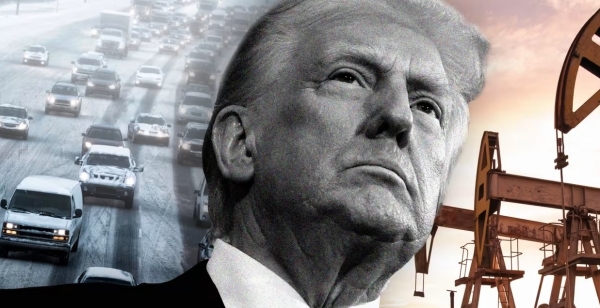
Gasoline Price Controversy in the US: President Trump Accuses Oil Companies of Price Gouging
In the context of continuously declining global crude oil prices, gasoline prices in the United States remain significantly higher than expected, sparking a major controversy in political circles and public opinion. President Donald Trump recently made strong accusations, alleging that oil companies are engaging in "price gouging" practices, preventing gasoline prices from decreasing in proportion to the sharp decline in crude oil prices.
Background of the Controversy
Global crude oil prices have witnessed a significant decline in recent months due to multiple factors including concerns about global economic recession, reduced geopolitical tensions, and abundant supply. However, gasoline prices in the US have not fully reflected this downward trend, causing many consumers and politicians to question the transparency within the oil and gas industry.
"We see oil prices dropping sharply, but why are American citizens still paying such high gasoline prices? Oil companies are making excessive profits from the pockets of ordinary people," President Trump stated during a recent press conference.
The Price Discrepancy Between Crude Oil and Gasoline
According to data from the U.S. Energy Information Administration (EIA), in the first quarter of 2023, WTI crude oil prices decreased by approximately 15%, while average gasoline prices in the US only decreased by about 8%. This growing gap has become the focal point of numerous controversies.
| Month | WTI Crude Oil Price (USD/barrel) | Average US Gasoline Price (USD/gallon) | Decrease Rate |
|---|---|---|---|
| January 2023 | 78.5 | 3.52 | - |
| February 2023 | 73.8 | 3.48 | -6.0% / -1.1% |
| March 2023 | 67.7 | 3.45 | -8.3% / -0.9% |
| April 2023 | 65.8 | 3.43 | -2.8% / -0.6% |
Analysis of Influencing Factors
The controversy centers on identifying the actual reasons why gasoline prices haven't decreased in proportion to crude oil prices. Economic experts have identified several factors that need to be considered:
- Taxes and Fees: Gasoline prices in the US include various federal, state, and local taxes and fees, accounting for approximately 15-20% of the retail price.
- Refining Costs: Operating costs of refineries and technical factors in the process of converting crude oil into gasoline also affect the final price.
- Corporate Profits: Oil companies maintain high profit margins, especially for refining and distribution companies.
- Distribution and Retail Costs: Transportation, storage, and retail station profit margins also contribute to the selling price.
- Local Factors: Gasoline prices can vary significantly depending on geographic location due to different levels of competition and transportation costs.
Reaction from the Oil Industry
Oil industry representatives deny the price gouging allegations, stating that the price discrepancy between crude oil and gasoline is completely normal and reflects actual costs within the supply chain.
"We operate in a competitive market, and prices are determined by supply and demand, not by a few large companies," the CEO of a major oil corporation stated. "Refining, distribution, and transportation costs don't decrease at the same rate as crude oil prices."
Impact on Consumers and Policy
High gasoline prices directly affect the spending of American households, especially as inflation has been high for many months. According to a survey by the American Consumer Research Institute, approximately 60% of American households have had to reduce spending on other items to cope with rising gasoline costs.
Under public pressure, the Trump administration is considering measures to intervene in the gasoline market, including:
- Strengthening antitrust investigations in the oil and gas industry
- Considering temporary gasoline tax reductions
- Boosting domestic energy production
- Increasing price reporting transparency
Expert Opinions
Economists have different perspectives on this issue. Some argue that the US gasoline market is not truly competitive due to the dominance of a few large companies, while others believe that prices accurately reflect market factors.
"The US gasoline market is highly competitive with thousands of independent gas stations, but refining companies are highly concentrated, creating an imbalance in the supply chain," a Harvard University economics professor analyzed.
Conclusion
The controversy over gasoline prices in the US reflects the challenges of regulating the energy market amid price volatility. Whether the "price gouging" allegations are accurate or not, the fact that gasoline prices haven't decreased in proportion to crude oil prices has had significant economic and political consequences.
This issue not only affects American consumers but may also impact the country's future energy policies. This controversy reminds us of the complexity of the energy market and the need for close supervision to protect consumer interests.
#GasolinePrices #USA #OilIndustry #DonaldTrump #PriceGouging #Energy #Economy