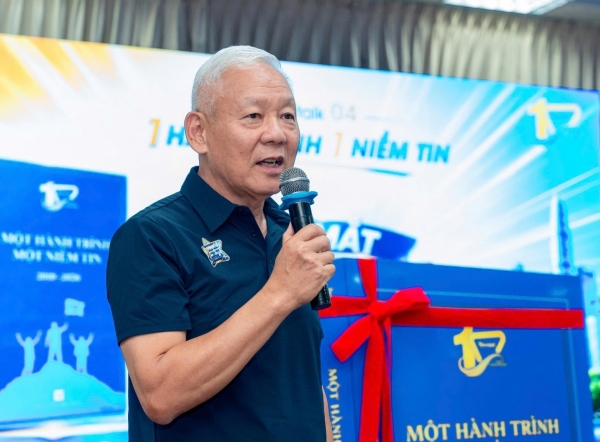
Empowerment and Risk Mitigation: Driving Petrovietnam's Proactive Offshore Expansion
In an era where the global oil and gas industry faces unprecedented challenges, the recent amendment of Vietnam's Oil and Gas Law represents a pivotal development in removing obstacles to petroleum investment activities. This legislative change not only presents an opportunity for the Vietnam National Oil and Gas Group (Petrovietnam) to strengthen its pivotal role but also establishes new mechanisms aimed at enhancing operational efficiency. According to Dr. Tran Van, enhancing decentralization and delegation of authority, coupled with robust risk-sharing mechanisms, will be the cornerstone enabling Petrovietnam to take greater initiative in seeking, exploring, and developing strategic projects in increasingly complex offshore environments.
Challenges and Opportunities in the Modern Oil and Gas Industry
The Vietnamese oil and gas sector currently confronts numerous significant challenges, ranging from global energy market volatility to difficulties in attracting investment capital. However, this juncture also presents an opportune moment for Petrovietnam to reassess its development strategy and identify new growth opportunities in an evolving energy landscape.
| Key Challenges | Strategic Opportunities |
|---|---|
| Global oil price volatility and market uncertainty | Amended Oil and Gas Law creating more favorable conditions for investment projects |
| Difficulties in attracting foreign and domestic investment | Emerging technologies enhancing extraction efficiency and reducing costs |
| Policy and regulatory framework adjustments | Expanded international cooperation potential in the oil and gas sector |
| Increasing operational costs and environmental compliance requirements | Development of new offshore fields with untapped potential |
The Strategic Importance of Decentralization and Authority Delegation
Dr. Tran Van emphasizes that strengthening decentralization and delegating authority to Petrovietnam's subsidiary units will significantly enhance the organization's proactivity and flexibility in decision-making processes. This structural reform enables the corporation to rapidly respond to changes in the business environment while maximizing investment opportunities across different segments of the oil and gas value chain.
The implementation of a more decentralized governance model allows for:
- Quicker response times to market opportunities and operational challenges
- Specialized decision-making based on local expertise and market knowledge
- Improved operational efficiency through reduced bureaucratic layers
- Enhanced innovation and risk management at the operational level
Risk-Sharing Mechanisms: The Foundation for Sustainable Development
Robust risk-sharing mechanisms are increasingly recognized as a critical factor enabling Petrovietnam to pursue ambitious offshore development projects with greater confidence. Such frameworks not only alleviate financial burdens but also facilitate partner participation, thereby enhancing the overall effectiveness and sustainability of energy projects.
Key components of effective risk-sharing in the oil and gas sector include:
- Financial risk distribution through joint venture structures
- Technology transfer partnerships to mitigate exploration risks
- Long-term contractual frameworks that balance rewards and responsibilities
- Insurance and guarantee mechanisms for high-capital projects
| Strategic Element | Implementation Benefits | Expected Outcomes |
|---|---|---|
| Enhanced Decentralization | Improved decision-making speed and relevance | More agile response to market opportunities |
| Authority Delegation | Empowered subsidiary operations with clear accountability | Increased operational efficiency and innovation |
| Comprehensive Risk-Sharing | Reduced financial exposure and enhanced cooperation | More sustainable project development and implementation |
Technological Innovation as an Enabler for Offshore Expansion
The integration of advanced technologies has become increasingly vital for Petrovietnam's offshore ambitions. Smart technologies, including digital twin platforms, artificial intelligence for reservoir modeling, and automated drilling systems, are transforming traditional approaches to offshore exploration and production.
Key technological innovations being implemented include:
- Digital Transformation: Implementation of comprehensive digital platforms for real-time monitoring and decision support
- Advanced Exploration Technologies: Seismic imaging and analysis techniques that improve the accuracy of offshore field assessments
- Automation and Robotics: Remote-controlled systems for underwater operations that enhance safety and efficiency
- Data Analytics: Big data applications for optimizing production and reducing operational costs
Future Outlook: Petrovietnam's Strategic Positioning
The amendment of the Oil and Gas Law represents not merely a necessary step in overcoming operational hurdles but also a strategic opportunity for Petrovietnam to enhance its competitive edge and pursue sustainable development. The empowerment of subsidiaries and robust risk mitigation frameworks will serve as critical drivers enabling the corporation to proactively expand its offshore operations in an increasingly dynamic oil and gas industry.
Looking ahead, Petrovietnam's success will depend on its ability to:
- Leverage technological advancements to optimize exploration and production activities
- Cultivate strategic partnerships that share both risks and rewards
- Maintain operational excellence while adapting to evolving environmental regulations
- Develop human capital capable of managing complex offshore operations
As Vietnam continues to position itself as a significant player in the regional oil and gas sector, Petrovietnam's proactive approach to empowerment and risk management will be instrumental in unlocking new opportunities and ensuring long-term sustainable growth in one of the world's most challenging and rewarding industries.