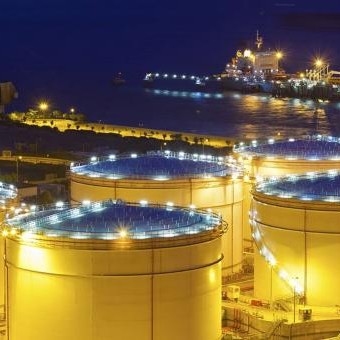
Energy Reserve Initiative: Nations Expanding Oil Storage Capacity to Future-Proof Against Crises
The closure of the Strait of Hormuz and the consequent entrapment of over 10 million barrels of crude oil daily in the Persian Gulf have served as a wake-up call for import-dependent nations, prompting them to expand strategic and commercial storage capabilities. Many countries, particularly in the Asia-Pacific region, are considering building new storage capacities to enhance energy security and never be caught off-guard by major supply disruptions like this one again.
From India to Australia, energy-importing nations are seeking to expand crude oil and fuel storage capabilities to better prepare for the next energy crisis, in today's fragmented geopolitical landscape. This has become a question of "when" rather than "if" such disruptions occur. Major oil producers are also considering expanding global storage sites to be able to sell their crude oil when the next critical bottleneck is closed.
The Role of Reserves in Oil Price Volatility
Prior to the conflict with Iran, few policymakers and analysts predicted that the Strait of Hormuz would become inaccessible to oil tankers. Importing oil nations had become complacent that, while the Middle East remained a powder keg, the Strait of Hormuz had never been closed before. But now we're in that situation - nearly four months of disrupted traffic and uncertainty about how quickly and smoothly reopening would occur have led to an energy crisis in Asia, depleting U.S. Strategic Petroleum Reserves (SPR) to their lowest level since 1983, and pushing Cushing, the WTI delivery point, to operationally stressed levels of just 20 million barrels.
Expanded storage capacity could help mitigate the impact during the next supply shock, whenever it occurs, dampening the impact of future price spikes. On the other hand, expanded capacities will need hundreds of millions of barrels of crude oil and fuel to fill them, creating additional short-to-medium-term demand and establishing a price floor for oil.
Plans for Expanding Storage Capacity
India, Singapore, Australia, and Pakistan are all seeking to enhance their storage capabilities to avoid future crises. According to Reuters calculations, all publicly announced storage plans in recent months could require approximately 500 million barrels of crude oil and fuel to fill the new capacities.
Furthermore, IEA member countries will need to replace 400 million barrels released in March, the largest coordinated release of oil stocks in history. The demand to restore 400 million barrels in countries like the U.S. and Japan will also support demand. Even more barrels will be needed to reverse the current drawdown in global inventories as demand peaks into summer, with inventories depleting despite the ongoing reopening of the Strait of Hormuz.
All these demands to fill existing and future storage sites could amount to approximately 1 billion barrels, spread over several years, according to Reuters calculations. This would help support global oil demand recovery from next year, assuming that traffic through the Strait of Hormuz can return to normal at some point in the second half of the year.
Summary of Energy Storage Expansion Plans
| Country | Current Status | Expansion Plans | Estimated Investment |
|---|---|---|---|
| India | 5.33 million tons (39 million barrels) - sufficient for 8 days of consumption | Build and fill new strategic petroleum reserve site | $1.6 billion |
| Pakistan | Not specified | Encourage Persian Gulf oil producers to establish storage buffers at Energy City near Gwadar port | Not specified |
| Singapore | One of the world's leading oil hubs | Explore additional underground space to increase fuel storage | Not specified |
| Australia | Lacks at least 90 days of consumption reserves | Build domestic fuel storage through mandatory shareholding obligations and Australia's Diesel Fuel Security Enhancement Program | AU$10 billion ($7 billion) |
| Saudi Arabia | World's largest oil producer | Expand global oil storage capabilities | Not specified |
Detailed Plans by Country
India: Enhancing Energy Security
India was the first country to shift toward enhancing storage capacity. As the world's third-largest crude oil importer but not an IEA member, India only has an underground Strategic Petroleum Reserve with a total capacity of 5.33 million tons of crude oil, equivalent to just 39 million barrels, or enough for eight days of India's consumption.
This week of reserves exposed India's vulnerability during the Hormuz crisis. Consequently, the government is now reportedly asking the Oil and Natural Gas Corporation (ONGC) to build and fill a new site for strategic petroleum reserves, with an estimated investment of $1.6 billion.
Pakistan: Partnering with Gulf Producers
Pakistan, on the other hand, is encouraging Persian Gulf oil producers to establish oil storage buffers at the planned Energy City near Gwadar port. "In emergency situations like when war breaks out, Pakistan will have first rights to use the stored oil," a Pakistani official told local media in May.
Singapore: Leveraging Geographic Position
Further east, Singapore, one of the world's leading oil hubs, announced it would explore additional underground space as options to boost fuel storage, according to Minister for Energy and Science & Technology Tan See Leng in April.
Australia: Major Investment for Energy Security
Australia, an IEA member but consistently failing to maintain at least 90 days of oil consumption reserves, plans to spend AU$10 billion ($7 billion) to build its fuel reserves to avoid future supply squeezes. During the current crisis, Australia had to rely on China for jet fuel while struggling to secure its own fuel supplies amid global shortages, and of its two refineries, one had been offline for months due to a fire.
The Australian government now aims to establish domestic fuel storage through mandatory shareholding obligations and build additional storage capacity through Australia's Diesel Fuel Security Enhancement Program.
Saudi Arabia: Producer Globalizing Storage
Not only import countries have committed to expanding storage capacities to mitigate the impact of future crises. The world's largest crude oil exporter, Saudi Arabia, is also considering expanding global oil storage capabilities, Aramco Chairman Yasir Al-Rumayyan said last week.
Saudi oil giant Aramco has storage facilities globally, mainly in Asia, Al-Rumayyan said, adding that "we are seriously thinking about having larger storage facilities worldwide."
Conclusion: The Future of Energy Security
This shift in energy policy demonstrates an increasing awareness of the fragility of global energy supply chains. Nations are realizing that in an increasingly tense geopolitical landscape, ensuring energy security is no longer a choice but a mandatory requirement.
The widespread expansion of storage capacity not only helps countries better cope with future crises but also creates stable demand for the oil market. However, filling new storage facilities will need billions of barrels of oil over the next few years, creating a price support factor for oil in the medium term.
As the Strait of Hormuz gradually reopens, the lessons from this crisis will shape global energy policy for years to come, with energy security becoming a top priority in national strategic planning.