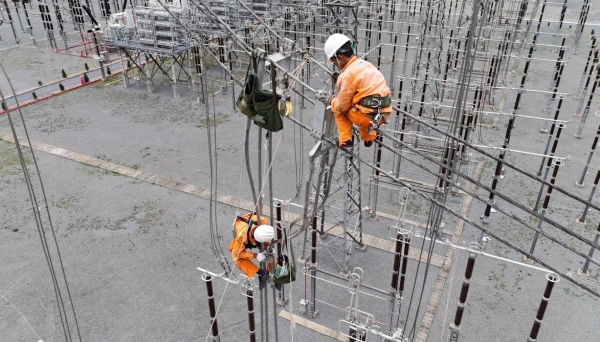
EVNNPT Enhances National Power Transmission Security Amidst Upcoming Peak Heatwave
Hanoi, June 20, 2026 - In anticipation of the next heatwave forecasted from June 21 to 26, 2026—with intensity expected to be comparable or even more severe than the period from May 23 to 27, 2026—the National Power Transmission Corporation (EVNNPT) has been implementing comprehensive measures to ensure the safe, continuous, and reliable operation of Vietnam's national power transmission system.
Heatwave Forecast and Its Impact on the Power System
According to the National Center for Hydro-Meteorological Forecasting, the upcoming heatwave is expected to last 6 days, with temperatures potentially reaching 39-40°C in many northern regions, particularly in major cities and provinces such as Hanoi, Hai Phong, Bac Ninh, Hung Yen, Vinh Phuc, and northwestern provinces.
Prolonged heatwaves not only affect public health but also pose significant challenges to the national power system. The surge in electricity demand, especially from cooling appliances such as air conditioners, fans, and refrigerators, places substantial pressure on both transmission and distribution networks.
EVNNPT's Role in Ensuring Energy Security
The National Power Transmission Corporation (EVNNPT), operating under Vietnam Electricity (EVN), is responsible for managing the national power transmission grid, serving as the "lifeline" of the country's electrical system.
EVNNPT-managed transmission systems encompass over 7,000 km of power lines and approximately 150 substations with a total transformer capacity exceeding 80,000 MVA. This network connects power plants with consumption areas nationwide, ensuring stable and continuous electricity supply.
EVNNPT's Strategies to Combat Heatwave Challenges
To ensure the safe operation of the transmission system during extreme heat conditions, EVNNPT has implemented a series of comprehensive measures:
- Conducting thorough inspection and maintenance of all power lines and substations before entering the peak season
- Enhancing 24/7 system monitoring using SCADA and other advanced surveillance systems
- Ensuring adequate stockpiles of materials, equipment, and personnel for rapid incident response
- Developing contingency plans for potential emergency scenarios
- Intensified patrol and inspection of critical transmission corridors
Comparative Analysis: May vs. June 2026 Heatwaves
The following table provides a comparative overview of the two heatwave events:
| Factor | May 23-27, 2026 Heatwave | Projected June 21-26, 2026 Heatwave |
|---|---|---|
| Duration | 5 days | 6 days |
| Maximum Temperature | 38-39°C | 39-40°C |
| Impact on Electricity Demand | 15-20% increase | Projected 18-25% increase |
| Most Affected Regions | Northeastern Region and Red River Delta | Entire Northern Region and parts of Central Vietnam |
Challenges and Countermeasures
Mr. Nguyen Van Hung, General Director of EVNNPT, stated: "This upcoming heatwave may be more severe than the previous one, presenting extremely high demands for transmission security. We have drawn valuable lessons from the earlier heatwave and are preparing more thoroughly for this event."
One of the most significant challenges is the risk of transmission line overload due to increased demand. To address this issue, EVNNPT has implemented several strategies:
- Redistributing transmission load across different power lines
- Proactively implementing power rationing in non-essential areas
- Enhancing coordination with member units to adjust electricity consumption schedules
- Preparing emergency response protocols for potential incidents
Electricity Demand Forecast During the Heatwave
According to EVN's projections, national electricity demand during the June 21-26, 2026 heatwave could reach 37,000-38,000 MW, representing approximately a 20% increase compared to normal levels. In the Northern Region, demand may reach 18,000-19,000 MW.
To meet this demand, EVNNPT has collaborated with other units within Vietnam Electricity to ensure adequate power supply and stable transmission across the grid.
Lessons Learned from the Previous Heatwave
During the May 23-27, 2026 heatwave, EVNNPT successfully addressed over 50 incidents on the transmission system, including 5 major incidents. Thanks to timely response measures and seamless coordination, the transmission system operated stably, ensuring electricity supply to critical areas.
However, the heatwave also revealed certain limitations, such as potential overload risks on older transmission lines and the need for substation upgrades. These lessons have been thoroughly documented and incorporated into preparations for the upcoming heatwave.
Expert Analysis
Dr. Tran Van Minh, an energy specialist, commented: "Prolonged heatwaves present substantial challenges to Vietnam's power system. While EVNNPT has made thorough preparations, long-term investment in transmission infrastructure upgrades is essential to meet growing demands and adapt to increasingly complex climate change impacts."
According to Dr. Minh, Vietnam should prioritize renewable energy development and implement smart grid technologies to more effectively manage electricity demand and supply in the future.
Conclusion
In preparation for the upcoming heatwave, EVNNPT has implemented comprehensive measures to ensure national transmission security. With thorough preparation and experience gained from the previous heatwave, the transmission system is expected to operate stably even under extreme weather conditions.
Nevertheless, this situation also presents an opportunity to evaluate and further enhance the national transmission system, better meeting economic and social development requirements while adapting to long-term climate change impacts.
The National Power Transmission Corporation (EVNNPT) remains committed to making every effort to ensure the safe, stable, and continuous supply of electricity to households and economic activities under all conditions, particularly during extreme heatwaves.