Maritime Industry Remains Cautious Following Hormuz Strait Peace Agreement
Despite a peace agreement reached earlier this week, shipping companies remain hesitant to navigate through the Strait of Hormuz, according to a leading shipping industry representative who warned that trade volumes will not return to full capacity until next year.
Shipping Companies Demand Concrete Evidence
Peter Aylott, Director of Policy at the UK Chamber of Shipping, told City AM that companies will need to see "quite a robust chain of evidence" that oil tankers stranded in the Persian Gulf can depart freely before they have sufficient confidence to resume transit through the strait following the agreement.
"We are grateful that things are moving in a positive direction, but at the same time, we are very cautious about moving vessels back through the Strait of Hormuz, considering the activity that has taken place during the ceasefire, and considering the fact that we've been in this situation before," he said.
Current Situation of Stranded Vessels
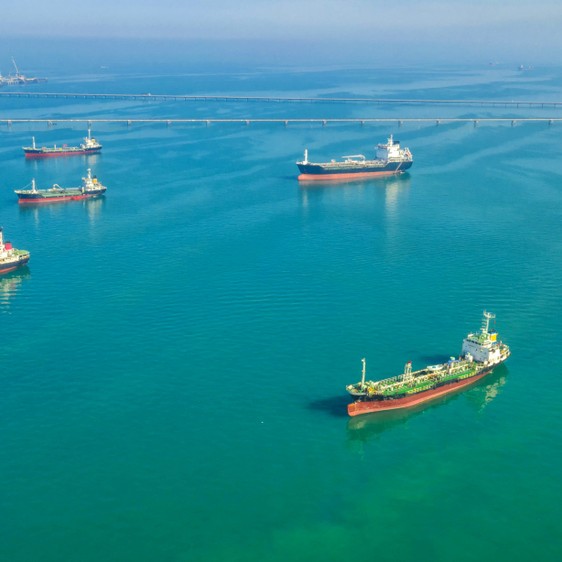
Dozens of vessels have been stranded in the Persian Gulf for months since Iran decided to block traffic through the narrow Hormuz sea lane in late February in retaliation for US airstrikes.
The closure of this chokepoint, which previously carried over one-fifth of seaborne oil and gas, has caused fertilizer and oil prices to skyrocket in recent months and has been a key tool in Iran's negotiations with the US.
| Timeline | Key Events | Impact |
|---|---|---|
| February 2024 | Iran blocks traffic through Strait of Hormuz | Hundreds of vessels stranded |
| March-May 2024 | Sharp increase in oil and fertilizer prices | Global inflation rises |
| Early June 2024 | Ceasefire agreement reached | Hope for reopening of strait |
Agreement Details Still Not Fully Disclosed
The long-awaited agreement has raised hopes that the Strait of Hormuz could reopen to shipping traffic from Friday, with President Trump calling on the stranded crews in the gulf to "start your engines."
However, the terms of the agreement - known as a Memorandum of Understanding - have not yet been fully disclosed, with Vice President JD Vance stating on Monday that "some issues" remain in the agreement, which is currently just one and a half pages long.
Shipping Volumes Won't Return to Normal 'This Year'
This lack of clarity has led Aylott to temper expectations about an immediate return to pre-war levels, saying that while some members of the industry organization "will start moving as soon as the piece of paper is signed," the majority will not.
"The risk assessment of many of our members has dictated that safe passage can only be achieved with a clear and strong ceasefire," he said.
| Indicator | Pre-war | Current | Projected 2025 |
|---|---|---|---|
| Vessels per day through strait | 150 | Less than 20 | 120-130 |
| Oil and gas transported (%) | 21% | 5% | 18% |
| Oil price (USD/barrel) | 75 | 92 | 78 |
Status of Stranded Vessels
Many members of the UK Chamber of Shipping own vessels stranded in the gulf, a small minority of which have successfully navigated around the closure of the strait and rescued oil tankers from the bottleneck. However, the majority remain stranded in the Persian Gulf, unable to depart due to fears of confiscation by the Iranian regime or encountering mines laid since the outbreak of war.
After the bulk of stranded vessels have escaped the gulf, any second phase of returning to normalcy would involve restoring normal commercial traffic through the channel in both directions.
Expert Analysis on When Commerce Might Normalize
But Aylott warns that even if optimistic, it will take several months for members to gain enough confidence to engage in free-flowing commerce through the strait.
"If by normal commerce you mean 150 vessels going in and out every day, I think, in reality, that cannot happen this year unless those discussions are astonishingly successful. And given that previous discussions between the US and Iran have taken an extremely long time, you can understand why I'm very cautious," he said.
Economic Impact Assessment
The closure of the Strait of Hormuz has had far-reaching economic consequences beyond just shipping. The disruption has affected global energy markets, with oil prices rising by approximately 23% since the blockade began. This increase has translated to higher transportation costs across multiple industries and contributed to inflationary pressures worldwide.
The agricultural sector has also been significantly impacted, with fertilizer prices increasing by up to 40% in some regions. This has raised concerns about food security and the potential for reduced crop yields in the coming growing seasons.
Industry Response and Adaptation
In response to the crisis, many shipping companies have rerouted their vessels around Africa, adding approximately 15-20 days to journey times and significantly increasing fuel costs. Some have opted to reduce their operations or switch to alternative modes of transportation where possible.
The insurance industry has also been affected, with war risk premiums for vessels transiting the region increasing by up to 500% in some cases. This has made shipping through alternative routes more economically viable despite the longer journey times.
Geopolitical Context
The Strait of Hormuz has long been a geopolitical flashpoint, with approximately 20% of global crude oil passing through this strategic waterway. The recent tensions between the US and Iran have highlighted the vulnerability of this critical shipping lane to political conflicts.
International maritime organizations have been working to establish alternative shipping routes and improve safety measures in the region. However, experts agree that no alternative route can fully compensate for the capacity and efficiency of the Strait of Hormuz.
Future Security Considerations
Industry experts emphasize that any long-term solution will need to address both immediate security concerns and establish sustainable diplomatic frameworks. The maritime industry is calling for clearer protocols for vessel protection, improved intelligence sharing, and enhanced cooperation between regional powers.
Shipping companies are also investing in advanced navigation technologies and route optimization systems to better navigate potential disruptions and minimize risks in the future.
Conclusion
The situation in the Strait of Hormuz remains uncertain despite the peace agreement. Shipping companies are demanding clear and reliable evidence of safety before they are willing to commit their vessels to this vital route once again. Meanwhile, the economic impact of the strait's closure continues to pressure global energy and agricultural markets.
While the agreement represents a positive step toward normalizing shipping through the region, industry experts caution that a full return to pre-war levels of commerce will likely take many months, if not a full year, to achieve. The maritime industry will continue to operate with heightened vigilance until the long-term stability of the region is firmly established.