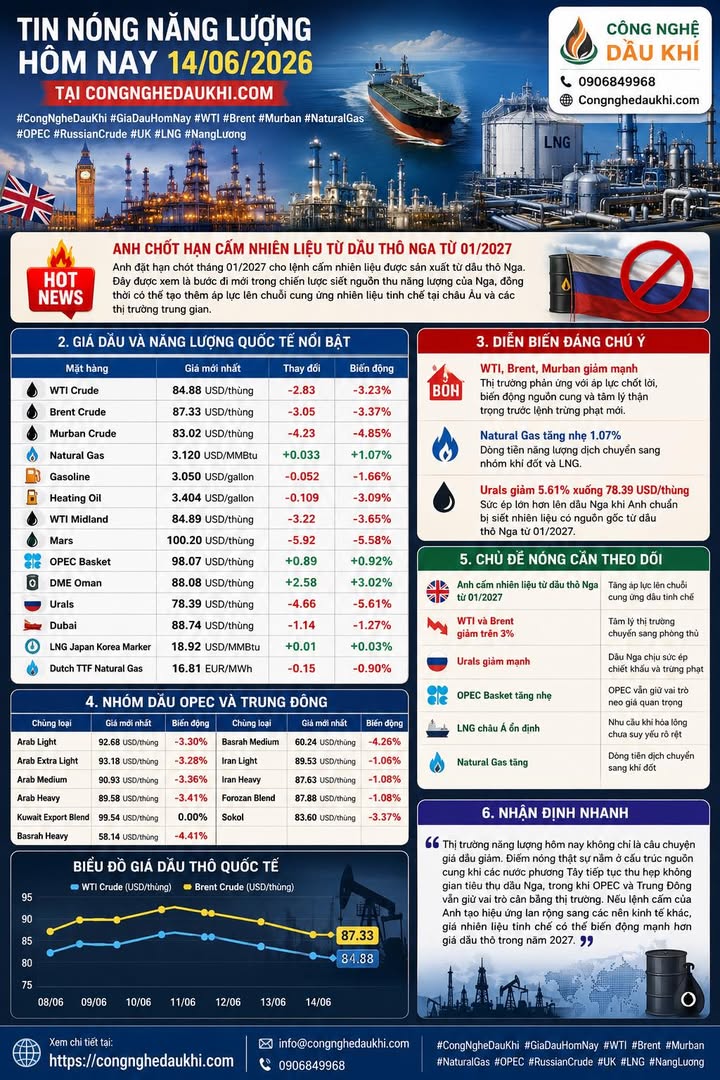
Global Energy Markets Face New Pressure as UK Announces Russian Fuel Ban for 2027
The global energy landscape stands at a critical juncture as the United Kingdom implements a definitive ban on fuels derived from Russian crude oil, effective January 2027. This strategic move signals an intensification of Western efforts to restrict Russia's energy revenue streams, potentially creating new volatility in refined product markets and reshaping global supply chains.
UK's Historic Ban: A New Chapter in Energy Geopolitics
The UK's decision to set a firm deadline of January 2027 for prohibiting fuels produced from Russian crude oil represents a significant escalation in the ongoing energy conflict between Western nations and Russia. This measure targets not just crude oil but the entire refined products value chain, affecting gasoline, diesel, and other petroleum derivatives that have Russian origins.
Industry analysts suggest this ban could create substantial disruptions in European and intermediary markets, potentially leading to:
- Increased competition for alternative crude oil sources
- Higher refining margins as refiners reconfigure their operations
- Greater price volatility in refined product markets
- Accelerated investment in refining capacity in non-Russian regions
Current Market Snapshot: Divergent Trends in Energy Complex
The energy markets today present a complex picture with crude oil prices facing downward pressure while natural gas demonstrates resilience. This divergence suggests a reallocation of investment within the broader energy sector.
International Energy Prices Overview
| Commodity | Latest Price | Change | Volatility |
|---|---|---|---|
| WTI Crude | $84.88/barrel | -2.83 | -3.23% |
| Brent Crude | $87.33/barrel | -3.05 | -3.37% |
| Murban Crude | $83.02/barrel | -4.23 | -4.85% |
| Natural Gas | $3.120/MMBtu | +0.033 | +1.07% |
| Gasoline | $3.050/gallon | -0.052 | -1.66% |
| Heating Oil | $3.404/gallon | -0.109 | -3.09% |
| WTI Midland | $84.89/barrel | -3.22 | -3.65% |
| Mars | $100.20/barrel | -5.92 | -5.58% |
| OPEC Basket | $98.07/barrel | +0.89 | +0.92% |
| DME Oman | $88.08/barrel | +2.58 | +3.02% |
| Urals | $78.39/barrel | -4.66 | -5.61% |
| Dubai | $88.74/barrel | -1.14 | -1.27% |
| LNG Japan Korea Marker | $18.92/MMBtu | +0.01 | +0.03% |
| Dutch TTF Natural Gas | €16.81/MWh | -0.15 | -0.90% |
Notable Market Developments
Several key trends emerge from today's trading session:
- Crude Oil Declines: WTI, Brent, and Murban crude oils all experienced significant declines, with the market reacting to profit-taking, supply concerns, and cautious sentiment ahead of new energy sanctions.
- Natural Gas Resilience: Despite broader energy market weakness, natural gas prices increased by 1.07%, suggesting that investment capital is partially shifting from crude oil to the natural gas and LNG sectors.
- Russian Oil Under Pressure: The Urals benchmark, representing Russian crude, fell by 5.61% to $78.39/barrel, reflecting mounting pressure on Russian oil in anticipation of the UK's ban and existing sanctions.
- OPEC Basket Strength: The OPEC basket price increased by 0.92%, indicating that the cartel continues to play a crucial role in price stabilization despite external pressures.
OPEC and Middle Eastern Oil Dynamics
The Middle Eastern oil complex presents a mixed picture, with most grades experiencing declines while the Kuwait Export Blend remained stable:
| Crude Grade | Latest Price | Change |
|---|---|---|
| Arab Light | $92.68/barrel | -3.30% |
| Arab Extra Light | $93.18/barrel | -3.28% |
| Arab Medium | $90.93/barrel | -3.36% |
| Arab Heavy | $89.58/barrel | -3.41% |
| Kuwait Export Blend | $99.54/barrel | 0.00% |
| Basrah Heavy | $58.14/barrel | -4.41% |
| Basrah Medium | $60.24/barrel | -4.26% |
| Iran Light | $89.53/barrel | -1.06% |
| Iran Heavy | $87.63/barrel | -1.08% |
| Forozan Blend | $87.88/barrel | -1.08% |
| Sokol | $83.60/barrel | -3.37% |
Key Themes Shaping Energy Markets
| Theme | Primary Impact |
|---|---|
| UK ban on Russian-derived fuels (2027) | Increased pressure on refined product supply chains |
| WTI and Brent decline (>3%) | Market sentiment shifting to defensive positioning |
| Sharp Urals decline | Mounting discount pressure on Russian crude amid sanctions |
| OPEC Basket price increase | Continued importance of OPEC in price stabilization |
| Asian LNG stability | Resilient demand for liquefied natural gas |
| Natural gas price increase | Capital reallocation from crude to gas sectors |
Market Outlook: Navigating a Restructuring Energy Landscape
Today's energy market dynamics reveal more than just declining crude oil prices. The critical development lies in the evolving structure of global energy supply as Western nations continue to restrict Russian oil market access, while OPEC and Middle Eastern producers maintain their balancing role.
If the UK's ban triggers similar measures from other economies, refined product markets could experience more pronounced volatility than crude oil markets by 2027. This shift would fundamentally alter the relationship between crude and product prices, potentially widening refining margins in regions with access to alternative crude sources.
The natural gas sector's relative strength suggests a broader reallocation of investment within the energy complex. As the world transitions toward a lower-carbon future, natural gas—particularly LNG—may serve as a critical bridge fuel, attracting sustained investment even as crude oil faces structural headwinds.
Market participants should closely monitor implementation details of the UK ban, as the definition of "Russian-derived fuels" and enforcement mechanisms will significantly impact market outcomes. Additionally, OPEC's response to these developments will be crucial in determining global price trajectories in the coming years.
As energy markets continue to restructure, the interplay between geopolitical decisions, supply chain adjustments, and investment flows will create both challenges and opportunities for producers, consumers, and investors alike.