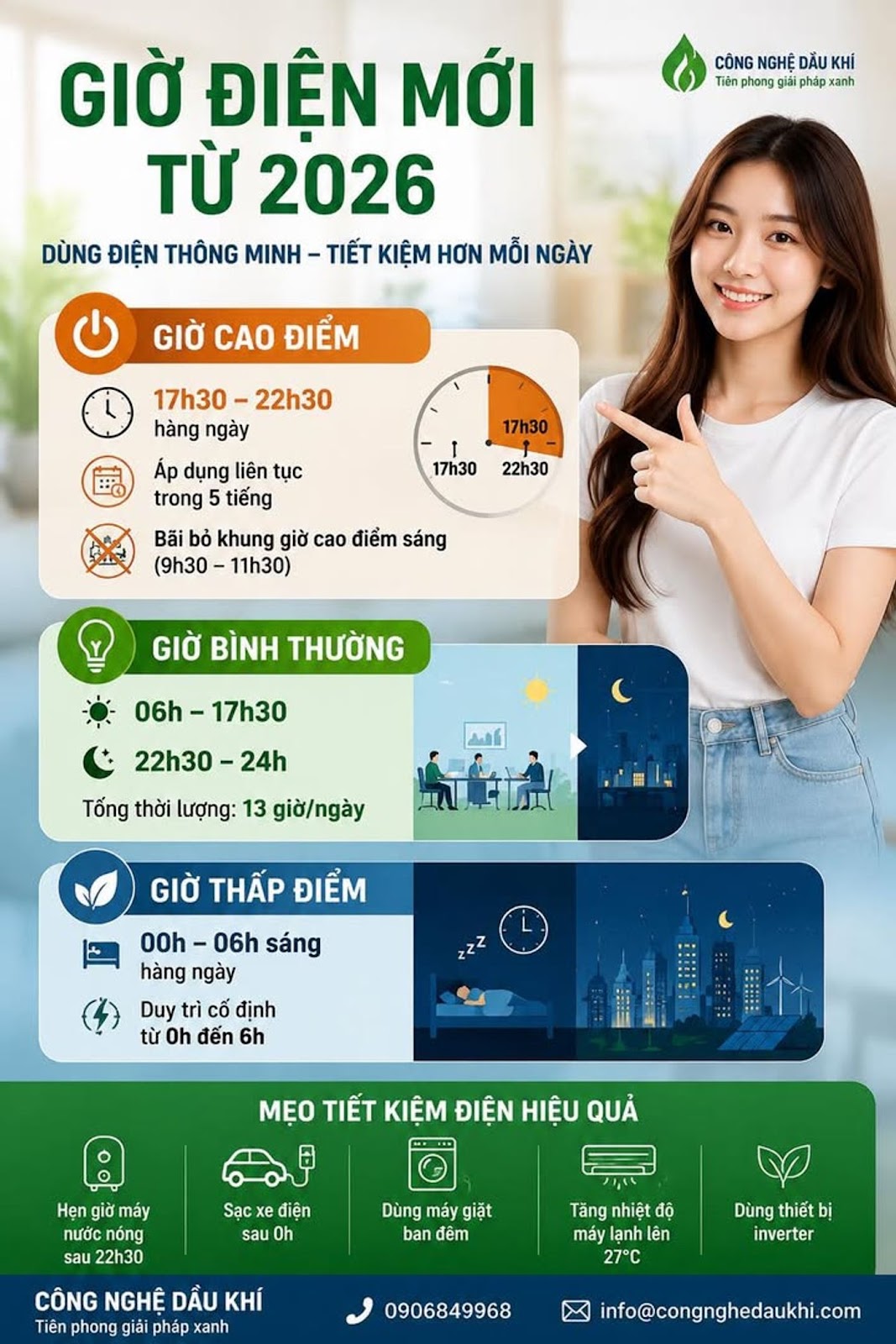
EVN Announces Major Change to Peak Electricity Hours Starting 2026
The Vietnam Electricity (EVN) has officially announced a significant revision to the peak electricity hours for both residential and commercial use, effective from 2026. This change has many consumers concerned about potential substantial increases in their electricity bills if they maintain their current consumption habits.
Under the new schedule, EVN aims to optimize the national electricity load and reduce consumption pressure during evening hours. The most notable change is the elimination of morning peak hours and consolidation of all peak periods into the evening.
Understanding the New Electricity Pricing Schedule
The revised electricity pricing structure introduces three distinct time periods with different rates:
| Time Period | Hours | Details |
|---|---|---|
| Peak Hours | 17:30 - 22:30 | Applies continuously for 5 hours |
| Normal Hours | 06:00 - 17:30 and 22:30 - 24:00 | Total of 13 hours per day |
| Off-peak Hours | 00:00 - 06:00 | Lowest electricity rates |
The most significant change is the elimination of the morning peak period (9:30-11:30). While this provides relief for businesses operating during daytime production, it creates substantial pressure on the evening time slot when nearly all households are using electricity simultaneously.
High-Power Appliances and Their Cost Impact During Peak Hours
Many household appliances consume significant amounts of electricity. When used during peak hours, they can substantially increase monthly electricity bills:
| Appliance | Average Power Consumption | Estimated Monthly Cost Increase |
|---|---|---|
| Air Conditioner (1.5HP) | 1200W - 1500W | +150,000 VND to +350,000 VND/month |
| Induction Cooktop | 1800W - 2200W | +120,000 VND to +300,000 VND/month |
| Water Heater | 2500W | +80,000 VND to +200,000 VND/month |
| Electric Vehicle Charger | 1500W - 3000W | +200,000 VND to +600,000 VND/month |
What surprises many consumers is how the new schedule nearly coincides with the most intensive period of household activities in Vietnam. The evening peak hours (17:30-22:30) align perfectly when families return from work and school, preparing dinner, relaxing, and charging various devices.
Who Will Be Most Affected by This Change?
Certain groups will experience more significant impacts from the revised electricity pricing structure:
- Families using multiple air conditioners in the evening
- Households with electric vehicles that charge after work hours
- Restaurants using continuous electric cooking equipment during evening hours
- Manufacturing facilities operating overtime after 18:00
- Apartment buildings with simultaneous air conditioning and high-power device usage
Effective Strategies to Reduce Electricity Costs
Consumers can implement several practical measures to mitigate the impact of higher electricity rates during peak hours:
| Energy-Saving Solution | Expected Effectiveness |
|---|---|
| Schedule water heater operation after 22:30 | 5-12% reduction |
| Postpone electric vehicle charging until after 00:00 | Significant cost reduction |
| Use washing machines at night | Noticeable savings |
| Increase air conditioner temperature to 27°C | Reduced electricity consumption |
| Use inverter-equipped appliances | Stabilizes electricity load |
Expert Perspectives on the Policy Change
Some energy specialists suggest that this change may be preparing Vietnam for a period of stronger electrification, with the rapid development of electric vehicles, AI servers, high-capacity air conditioners, and the explosive growth of smart home ecosystems.
However, other voices express concern that the continuous 5-hour evening peak period will catch many households "off guard" if they don't promptly adjust their electricity consumption habits.
Looking Ahead: Balancing System Optimization and Consumer Impact
The new electricity pricing structure represents a significant shift in how Vietnam manages its national electricity grid. While it aims to optimize the overall system by shifting consumption patterns away from the evening peak, it places greater responsibility on consumers to adjust their usage habits.
As Vietnam continues to develop its energy infrastructure and integrate more renewable sources, such demand-side management strategies will likely become increasingly important. The success of this policy will depend on how effectively EVN communicates the changes and how well consumers adapt their consumption patterns.
For the upcoming summer season of 2026, when electricity demand typically peaks, this new schedule could either help optimize the national electricity system or lead to increased bills for households that haven't modified their usage habits. Only time will tell which outcome prevails.