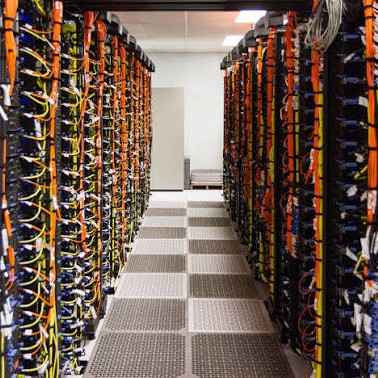
Burst of AI Drives US Electricity Demand to Record Levels
Electricity consumption in the United States reached a new record last year and is heading toward all-time highs this year and next, as the AI boom has ended the country's decade of stable electricity consumption. While increasing electrification is partially responsible for higher electricity demand, the AI boom and the data centers supporting it are the primary drivers of electricity demand growth and will continue to be so for the coming years.
AI-Driven Electricity Demand Surge
According to data from Ember, analyzed by Reuters journalist Gavin Maguire, total U.S. electricity supply reached a record 2,234 terawatt hours (TWh) in the first half of 2026, up 3% from the same period the previous year. This growth is primarily coming from data centers, as "data center load is becoming the main driver of long-term electricity growth in the U.S.," as the U.S. Energy Information Administration (EIA) noted in its annual outlook earlier this year.
After reaching a record 4,195 billion kilowatt hours of total electricity consumption in 2025, the U.S. will see this usage rise to 4,269 billion kWh this year and 4,399 billion kWh next year, according to the latest EIA forecast in the Short-Term Energy Outlook (STEO) report in July.
Commerce Becomes Largest Electricity Consumer
More notable than the projected consumption records is the EIA's forecast that sales to customers in the commercial sector will exceed residential customer sales for the first time in history and will continue to be the largest electricity-consuming sector in 2027, surpassing both the residential and industrial sectors.
The EIA forecast shouldn't come as a surprise as the commercial sector with data center loads has led U.S. electricity demand growth in recent years. And it is expected to lead consumption growth for many years to come, raising difficult questions for U.S. policymakers about the prices residential consumers will have to pay and the willingness or unwillingness of the grid to support increased demand in this decade after nearly a decade of no electricity growth.
Data Centers Shaping America's Energy Future
Electricity demand from U.S. data centers is expected to more than double to 66 gigawatts (GW) by 2027 from 31 GW in 2025, driven by the accelerating build-out of AI infrastructure, according to a May report from Goldman Sachs Commodities Research.
Data centers' share of U.S. peak summer electricity demand is expected to rise to 8.5% by 2027 from 4.1% in 2025, "creating significant tightening across the national electricity market," Goldman Sachs estimated.
| U.S. Electricity Demand Forecast (billion kWh) | 2025 | 2026 | 2027 |
|---|---|---|---|
| Total Consumption | 4,195 | 4,269 | 4,399 |
| Commercial | - | Surpasses Residential | Remains Largest |
| Data Centers (GW) | 31 | - | 66 |
U.S. Electricity Supply Structure Changing
In terms of share in U.S. electricity generation, natural gas remains the primary fuel, at about 40% this year and next, nuclear energy will stabilize at 18%, but coal will decrease from 17% in 2025 to 15% in 2026 and 2027, according to the latest EIA forecast.
A key milestone, solar energy held a record 12.8% share in U.S. electricity generation in May, surpassing coal generation for the first full month, according to data from Ember released last month.
In May, solar energy also became the third-largest electricity source in the U.S., after natural gas generation and nuclear power, according to Ember's report.
| Percentage of U.S. Electricity Supply | Natural Gas | Nuclear | Solar | Coal |
|---|---|---|---|---|
| 2025 | ~40% | 18% | - | 17% |
| 2026/2027 | ~40% | 18% | 12.8% (May 2026) | 15% |
Solar Energy Growing Strongly
Meanwhile, coal-fired electricity generation hit an all-time low of 39.3 TWh in April 2026. Coal-fired generation rebounded to 43.4 TWh in May, but was still 11% lower than May 2025, and accounted for 12.2% of U.S. electricity supply.
"From Texas to California, markets across the U.S. are betting on solar to meet rising electricity demand," said Nicolas Fulghum, Senior Data Analyst at Ember.
According to the quarterly report from the Solar Energy Industries Association (SEIA) and Wood Mackenzie, solar and storage provided 91% of all new capacity added to the U.S. grid in the first quarter of 2026.
SEIA noted that states won by President Trump accounted for 74% of all solar capacity installed in the first quarter, with Texas continuing to be the fastest-growing solar market among U.S. states.
Conclusion
The AI boom is reshaping America's energy landscape with record electricity demand, while renewable energy, particularly solar, is gradually replacing coal. This transition presents both challenges and opportunities for policymakers and the energy industry as the United States enters a new era of strong electricity demand growth.
#AI #SolarEnergy #DataCenters #EnergyTransition #USA